360-676-5120
Why Are Yellowjackets and Wasps More Aggressive at the End of Summer?
If it seems like yellowjackets and other stinging insects become more noticeable toward the end of summer, you’re not imagining it.
Late summer is one of the busiest times of year for yellowjackets, hornets, and wasps in Whatcom and Skagit Counties. Colonies that started small in the spring have had months to grow. By August and early fall, some nests can contain hundreds or even thousands of insects.
Understanding what’s happening inside these colonies can help you know what to watch for around your home.
Stinging Insect Colonies Are at Their Largest
Many social wasps begin the season with a single queen establishing a new colony. Throughout spring and summer, the colony produces more workers, and the nest continues to grow.
By late summer, that small nest you may not have noticed in June can be much larger and considerably more active.
Nests may be found:
- Underground in yards and landscaping
- In trees and shrubs
- Under eaves
- Inside wall voids
- Around sheds and outbuildings
- In other protected areas around a property
If you notice insects repeatedly flying to and from the same location, there may be an active nest nearby.
Why Do Yellowjackets Seem More Aggressive in Late Summer?
Yellowjackets can become particularly troublesome as summer winds down.
Earlier in the season, workers spend much of their time gathering protein to feed developing larvae. As the colony’s needs begin to change later in the season, workers increasingly seek sugary foods and other easy sources of energy.
That can bring them into closer contact with people.
Outdoor meals, soda cans, garbage containers, fallen fruit, and other sweet foods can attract yellowjackets. That’s one reason they can suddenly seem to be everywhere during a late-summer barbecue or picnic.
Large colonies also have more workers available to defend their nests. Accidentally disturbing an underground nest while mowing the lawn or working in the yard can quickly become a painful experience.
Bald-Faced Hornet Nests Can Become Hard to Miss
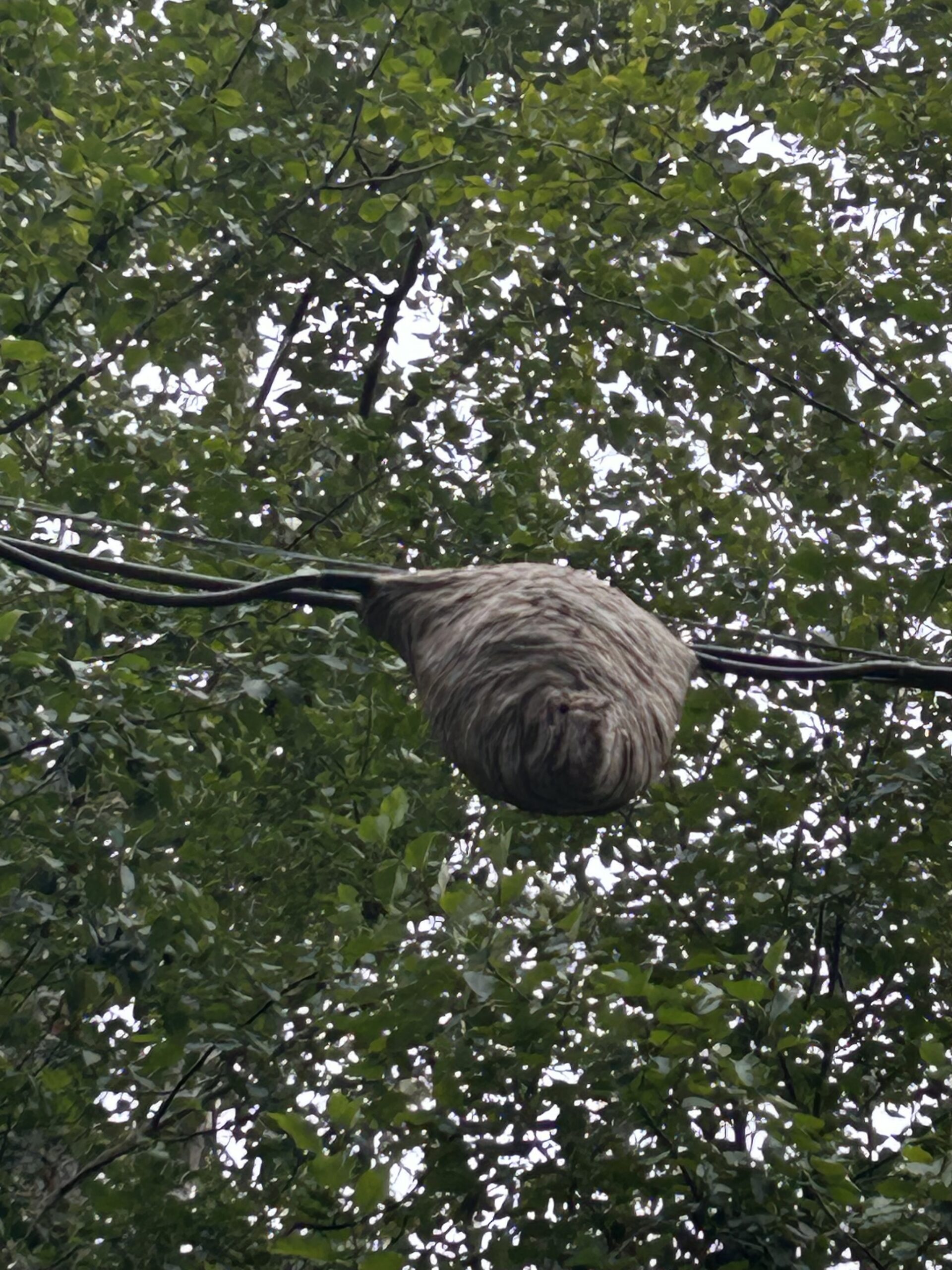
Bald-faced hornets build the large, enclosed paper nests often seen hanging from trees, shrubs, and structures.
These nests can become surprisingly large by the end of summer. Although an established nest may be easy to spot, attempting to remove it yourself can provoke a defensive response from the colony.
Give the nest plenty of space and consider professional removal, particularly when it’s near your home or an area frequently used by people or pets.
Watch for Underground Yellowjacket Nests
Some of the most troublesome nests are the ones you can’t see.
Yellowjackets commonly establish colonies underground, sometimes using existing holes or abandoned rodent burrows. You may not realize a nest is present until you notice insects repeatedly entering and leaving a small opening in the ground.
Be especially cautious when mowing, trimming vegetation, or doing yard work. Vibrations and activity near an underground nest can cause the colony to become defensive.
Protect Your Outdoor Living Areas
August and September are some of the best months for enjoying your patio, deck, and backyard. Unfortunately, they’re also busy months for stinging insects.
Pay attention to increased activity around:
- Outdoor dining areas
- Children’s play areas
- Pet areas
- Decks and patios
- Garbage and recycling containers
- Fruit trees
- Eaves and rooflines
- Trees and shrubs
Seeing an occasional wasp doesn’t necessarily mean you have a nest. Repeated activity in one specific location, however, is worth investigating.
Not Every Stinging Insect Is a Pest
It’s also important to remember that not everything buzzing around your yard needs to be eliminated.
Honey bees and bumble bees are valuable pollinators that play an important role in our local environment. Proper pest management starts with identifying the insect and determining whether treatment is necessary.
If you’re unsure what you’re seeing, don’t start spraying first and identifying later.
Found a Yellowjacket, Wasp, or Hornet Nest?
Late-summer nests can be large and well established. Trying to knock down, spray, plug, or otherwise disturb an active nest can increase your chances of being stung.
Environmental Pest Control has been helping homeowners throughout Whatcom and Skagit Counties deal with stinging insects since 1989. Our experienced technicians can identify the insect, locate the nest, and recommend the appropriate treatment.
If stinging insects are making it difficult to enjoy your yard, give us a call.
Whatcom County: 360-676-5120
Skagit County: 360-424-0399